
Make Informed Decisions About Your Cat's Care
A breed isn’t a diagnosis. It’s a set of gentle odds. Knowing that a Maine Coon warrants a listen to the heart, or that a flat-faced Persian will need help with tear staining, doesn’t mean trouble is coming. It means we know where to look first, which is often what lets us catch something early rather than late.
These guides cover the cat breeds we see, along with what they’re like to live with and what our team keeps an eye on as they age.
What Does My Cat's Breed Tell Me?
Mostly, it tells you what kind of roommate to expect, and where to pay a little extra attention.
Temperament runs surprisingly true to type in cats. Some breeds are talkative and demanding of company; others are quiet and independent, and a mismatch between what a breed needs and what a household offers is behind much feline stress. The health side is smaller than in dogs, but it’s real: a handful of breeds carry specific predispositions worth knowing, and the individual guides get into them.
And if your cat is a mystery mix, as most of the best ones are, none of this is lost on you. The general guidance across these guides, good food, a healthy weight, dental care, and attention to changes, applies to every cat regardless of ancestry.
Do Purebred Cats Have More Health Issues?
Some do have specific predispositions, and it’s worth understanding why without overstating it. Purebred cats are drawn from a smaller gene pool, which can concentrate certain inherited conditions. Two of the most discussed across multiple breeds are hypertrophic cardiomyopathy, the most common feline heart disease, and polycystic kidney disease. Responsible breeders screen for these, which is one of the real reasons to ask a breeder what testing they do.
The body-shape point that looms so large in dogs is much smaller in cats, with one notable exception: flat-faced breeds. Persians and other flat-faced cats can face some of the same breathing, eye, and dental challenges as flat-faced dogs, along with the tear staining that comes with the face. It’s worth knowing going in, though most of it is manageable with routine care.
None of this should steer anyone away from a purebred cat. It simply means that with a known breed, we know which questions to ask a little earlier.
Find Your Cat’s Breed

American Shorthair Health and Care
The American Shorthair is the working cat that came over on early ships and earned its keep, and that heritage shows. This is a sturdy, even-tempered, low-drama cat with few of the specialized problems that follow the more heavily engineered breeds. If you want the pleasant surprise up front, this is one of the healthier,…
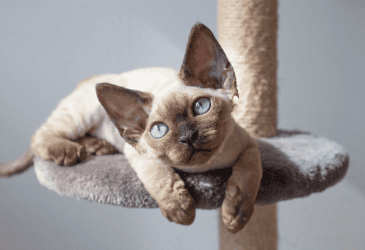
Devon Rex Health and Care
The Devon Rex is the pixie of the cat world: big ears, huge eyes, an elfin face, and a soft, wavy coat unlike almost any other cat. They're mischievous, people-obsessed, and often described as more like a monkey or a dog than a typical cat, riding on shoulders and following their people everywhere. That unusual…

Exotic Shorthair Health and Care
The Exotic Shorthair is often affectionately called the lazy man's Persian, and it's an accurate nickname: the same round face, sweet expression, and placid temperament, in a short, plush coat that doesn't demand daily grooming. They're calm, affectionate, and quietly devoted. The thing to understand before you bring one home is that the flat face…
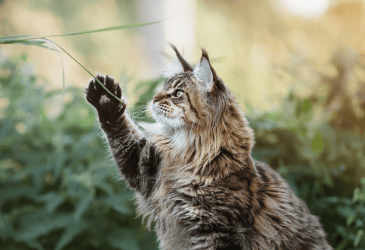
Maine Coon Health and Care
The Maine Coon is the gentle giant of the cat world, and everything about them is oversized: the ruff, the tufted ears, the long shaggy coat, the plumed tail, and a personality far more dog-like and companionable than the aloof-cat stereotype. They follow you around, they chirp and trill instead of meowing, and many genuinely…
